- The Weekly Grind
- Posts
- Pavlovian Frustration, Tactical MSP Takeaways, and 120 Days of AI Learnings at Auvik
Pavlovian Frustration, Tactical MSP Takeaways, and 120 Days of AI Learnings at Auvik
Issue 05: The Weekly Grind

John Harden
June 06, 2025
👋 Welcome to the grind
I’m John Harden, and if you’ve seen me on LinkedIn, you know I’ve got a lot to say about life in the MSP trenches. This newsletter is where I bring it all together—my latest posts, no-BS takes on the industry, and highlights from webinars and livestreams. If you’re in the MSP industry looking to grow, sharpen your game, or just want to hear from someone who’s been in the thick of it, subscribe and come along for the ride.
Break the MSP Blueprint, Build Real Relationships, and Steal Some Rocks
Alex Farling at Empath joined us to expose the traps of cookie-cutter MSP strategies and shared how to flip the customer experience by asking better questions and ditching the “blueprint.” This one’s packed with hard truths, fresh frameworks, and a story about stealing hotel rocks.👇
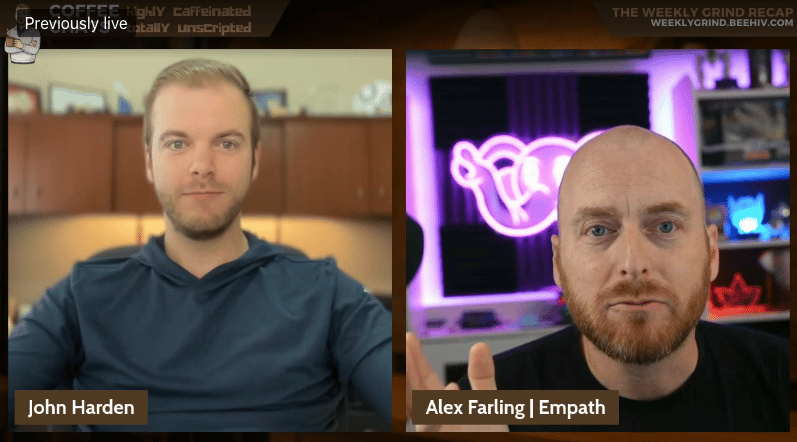
🔍 What we learned:
Too many MSPs follow the same script: same stack, same sales motion, same frustrations. Alex makes it clear… if your only customer touchpoint is during pain, they’ll associate your brand with pain. From pre-sales budget transparency to Pavlovian relationship dynamics, Alex offers a path forward rooted in empathy, strategic differentiation, and real human connection.
💡 Biggest takeaways:
Pavlov Was Right… And Your MSP Is the Bell.
"If every time your client hears from you it’s bad news, they’re going to associate you with frustration." Break the conditioning by proactively reaching out during the good times more often than the bad.
There Is No Blueprint. Only Conversations.
“Every MSP is trying to look the same. The only way to stand out is to talk to your customers.” Ask: What does it feel like to work with us? What can we do differently?Budget Talks Belong in Pre-Sales.
Don’t fear the dollar sign. Bring up budget early. If they’re not ready to talk dollars, they’re not ready to partner.
The “Five Rocks” Rule
Five relationship-oriented phone calls per day. Put five rocks, glass beads, or rubber ducks on your desk—don’t log off until they’re in the drawer.
Don’t Be Afraid to Be Vulnerable
The best feedback Alex ever got? From his customers, by talking to them. Use that insight to build better relationships and processes.
✅ Recommendations:
Interview your top clients. Ask: “What does it feel like to work with us?” and “What could we do better or differently?” Then repeat that language in your prospecting.
Create proactive check-in cadences. Especially with your top 5–10 clients, don’t wait until they’re frustrated.
Practice hard conversations. Budget talks, stack changes, and pricing increases shouldn’t be surprises. Normalize those topics from Day 1.
Huge thanks to Alex Farling for sharing raw truths and tactical gold. The “rock story” from Kyle, the budget pre-sale moves, and the Pavlov insight. This episode’s a playbook for MSPs looking to level up real relationships.
What’s one small thing you’ll implement today to move 1% closer to success?
120 Days of AI at Auvik: What We’ve Learned (and What We Didn’t See Coming)
Over the last 120 days, we’ve been on a pretty incredible journey at Auvik. We’ve reshaped how we approach AI, not just as a buzzword, but as a real tool for transformation. And I wanted to share a bit about what we’ve learned along the way: both the wins and the bumps in the road.
Let’s be real: AI is everywhere. It’s the topic on every podcast, every panel, and every headline. But when you strip away the hype, implementing AI inside a company is really just like any other change management project. There’s nothing magical about it, it’s about clarity, communication, and commitment.
In our first 120 days, we hit some major milestones. We saw a 10x increase in daily active users of our internal AI tools. We rolled out our first agentic AI use cases that are actively helping teams across the org. And our hackathon sparked a 12x jump in the number of departments actively using custom GPTs, alongside a 73% increase in actual custom GPTs created.
I remember kicking off our all-company AI initiative with a presentation that brought together every department head. We knew we had to talk honestly about what this shift meant, especially with sensitive topics in the mix. We started with the basics: an AI and IT policy to set clear boundaries on what’s OK and what’s not. But then we tackled something even more delicate: job fears.
Because yeah, people are nervous. According to one stat we shared, 53% of workers worry AI could take their jobs. And honestly? I get it. That fear is everywhere. But here’s the thing, it’s not AI alone that poses the risk. It’s someone else who knows how to use AI better. That message hit home.
After that, we pivoted toward practical, real-world use cases. We wanted to focus on actual business value, not just excitement for excitement’s sake. So we backed it all up with real resources: we delivered four targeted ChatGPT training sessions across the org.

Totally not an AI-generated gif.
The first was all about prompting basics. I thought it would be the least attended session. Turns out, it was one of the most popular. Not everyone knows how to build a solid prompt. That was my big aha moment.
The second training dug into advanced features like memory, switching between models, and a few life pro tips (LPTs) that took everyone deeper into what’s possible. Then we had a session dedicated to building custom GPTs. That’s where we really unlocked creativity. One team even built a sales call simulator for reps to practice cold calling. Brilliant stuff.
The fourth session was a deep dive into AI for research and reporting. This was about how to really dig in and get valuable, structured insights out of the chaos of data.
But we didn’t stop at training. We had dedicated Slack channels, ongoing all-company presentations, and a rolling initiative we called “AI Hack in 5,” where any department could demo how they were using AI to the whole company.
And most importantly, we gave everyone access. You can’t talk about being AI-forward and then have half your team sitting on the sidelines. It’s a cost, sure, but it’s a cost we were willing to take on because we knew that empowering every employee would pay off in efficiency, innovation, and future readiness.
Now, what worked? Training at all levels, especially starting with the basics, was a game-changer. Showcasing use cases across departments led to some of the most inventive ideas we’ve seen. Giving people space to experiment with AI in their workflows turned out to be incredibly valuable. And our three-day engineering and product hackathon? Some of the most forward-thinking features we’re building today came out of that.
But it wasn’t all perfect. Breakout rooms during training didn’t land well. A lot of folks just didn’t want to learn AI in front of others. We also moved too fast at times. We didn’t set up an AI committee or roadmap early enough, and that meant we were building the plane while flying it. And finally, we could’ve done a better job tracking impact. We’re lucky we ran a baseline survey at the start, which we’ll revisit in the coming months to see how much folks have grown.
Overall? We’re proud. We’ve seen real traction and hit some meaningful growth milestones. And while I had the privilege of leading the communications and training efforts, it was truly a team effort—every department head, every contributor, all in.
Here’s to continuing the journey.
🎙️ I’m Live Next Week
Rise and grind for the tech career you actually want 👇
Whether you’re stuck at the help desk or eyeing your next bold pivot, this LinkedIn Live is brewing real talk and raw advice for MSP pros ready to level up. Join Esther Deutsch, Senior MSP Success Manager at Net at Work, and I for a candid conversation about building a career that excites you—not just one that pays the bills.
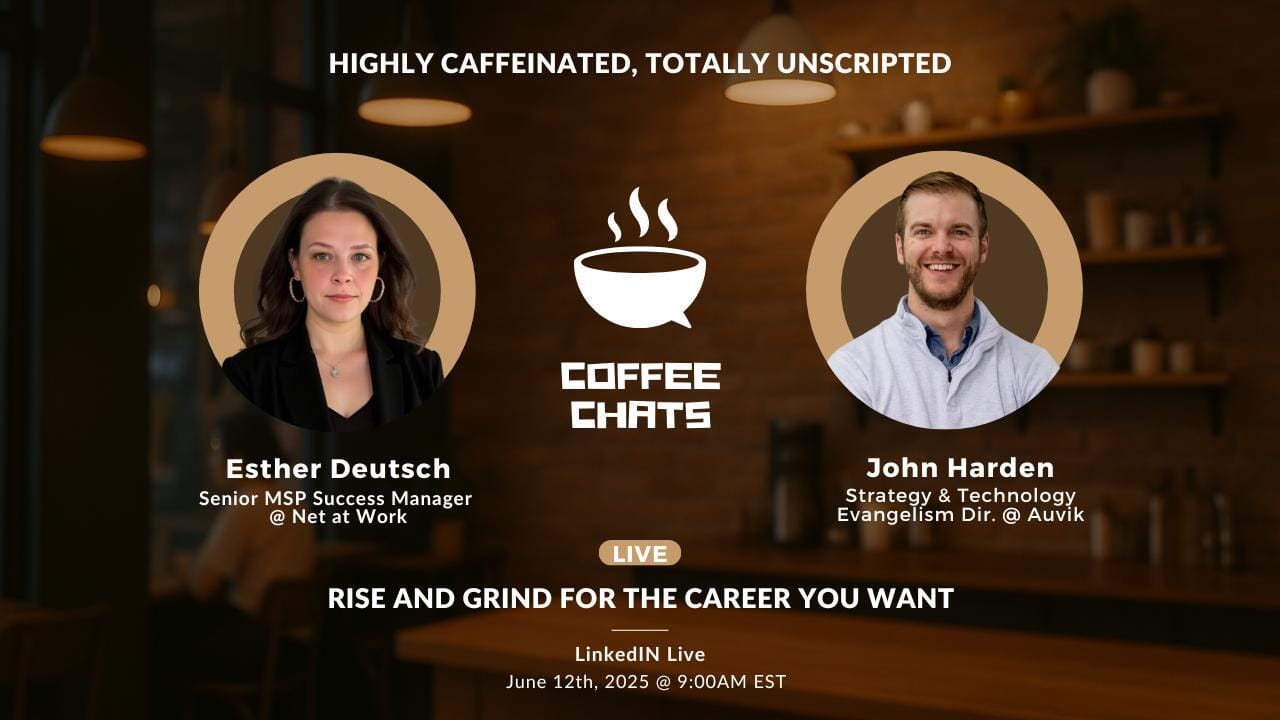
What we’ll cover:
Career plot twists: What unexpected turns taught Esther and John the most
MSP growth paths: How can you move from support roles to strategic seats—and who tends to rise fastest?
Mistakes with momentum: What failures turned into fuel for career growth
Personal branding: In a virtual-first world, how do you stand out?
Passion vs. paycheck: Is loving your job a luxury—or a must-have?
🔗 Stuff Worth Clicking
📬 Hit Me Back
That’s it for this week—go forth, break blueprints, steal hotel decor (ethically, please), and make five calls that don’t start with “We’ve detected an issue.” Got a favorite trick for building better client relationships—or a weird object on your desk that helps you remember?
Hit me back. Bonus points if it’s weirder than Kyle’s rocks. 🪨💬
Let’s keep the conversation going.

Reply